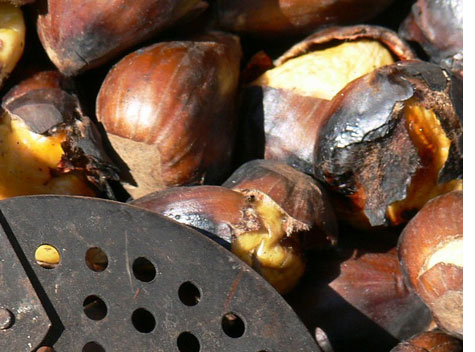
Castanyada is a Catalan festivity that is celebrated on the “Día de Todos los Santos” to honor and remember those that are no longer living. During this celebration, families and friends gather to eat together chestnuts, panellets, sweet potatoes and canned fruit. The origin of this day is said to have stemmed from when bell ringers would work all night in churches to tell villagers of prayer times for the dead, and due to their exhaustion they’d eat these high energy foods. At this time, people also go to cemeteries to put flowers on the graves and remember their dead relatives and and friends. The Castanyada is more of a happy festival than it is a sad day of remembrance. It seems to be a mix of the Mexican day of the dead and the American halloween between the going to the graves and celebrating and the consumption of sweet foods.
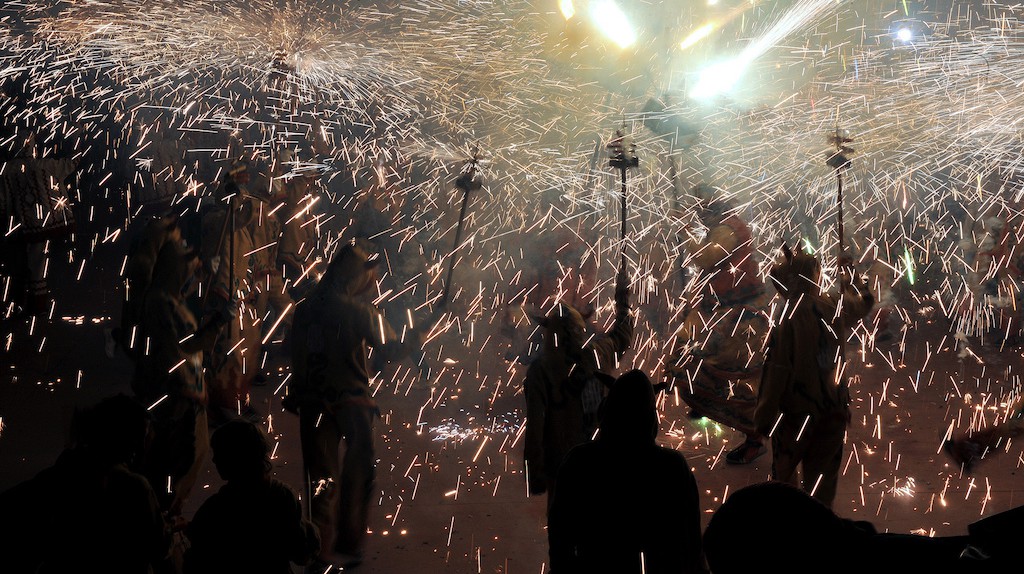
Correfoc, or ‘fire-run’, is a performance where people dress as devils and monsters that arm themselves with pitchforks and they set of fireworks in the crowds. These runs began in Catalunya in the 1980s and are believed to have begun as an interaction between spectators and participants in the traditional Ball de Diables, a theatrical performance where performers recreate the duel between Good and Evil. I had the chance to attend the Correfoc this year and while I didn’t know exactly what was going on and why, it was an incredible time. From seeing the devils and their pitchforks shooting off fireworks/fire to seeing the giant, animals and monsters that the participants had that shot off fire it was truly an experience that I’d never expected. In the moment, it was quite scary since I didn’t understand the background of it. It almost felt like I was a devil worshiping revival type of thing. Now that I understand the meaning of it being Good vs Evil, I feel like I’m able to truly appreciate it more. I think it’s an experience that everyone should see atleast once in their life. And they should be sure that they have some type of hood and their body’s covered, one of my friend’s hair actually caught on fire.
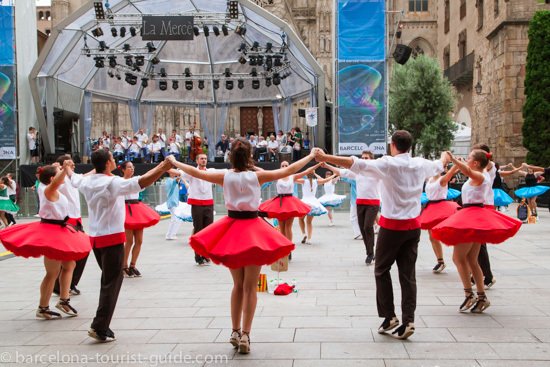
The Sardana is a Catalan dance that is a symbol of unity and pride. It is considered the traditional national dance of Catalunya that has been important for Catalan people for hundreds of years. The dance itself has people join their hands together to make a large circle where they dance together with small, precise steps while the circle goes slowly round and round while more people join. One interesting thing about this dance was that it was banned during the Franco Era, as well as any other expression of Catalan culture, like the Catalan language and even Catalan road names were changed. This point in time had made the Catalan culture even more powerful with the symbols having even more meaning. I believe that this is what makes the dance so powerful and meaningful. Catalan people joining hands, holding their heads up proud, and just dancing and enjoying life together. I think that this would have been a great thing to learn during class and one day be able to actually join a group doing it, especially since the steps are so precise.
This post talks about the over 110,000 people in Spain that have been infected with the coronavirus and the over 10,000 people that have lost their lives to it. I remember talking to my host dad that’s a doctor in Barcelona before I left about his opinion on the virus in Spain and he’d told me he thought we’d have it worse than Italy did. At first, I thought this wasn’t possible as Italy was to the point they had to choose what patients they could treat and had to turn others away and Spain had only a few hundred cases. Seeing the numbers now is completely heartbreaking. It’s almost like if you yourself don’t have the virus, someone that you know will. This article has a chart that breaks down the age range of people that are infected, treated, and pass away. 60% of deaths are of people age 80 and older and while in a sense it’s a relief that younger individuals are able to fight it, it’s still heartbreaking that these older adults are losing their lives to a virus. I’m hoping that the curve is able to be flatten soon and eventually begin decreasing to the point the virus is no longer prevalent.
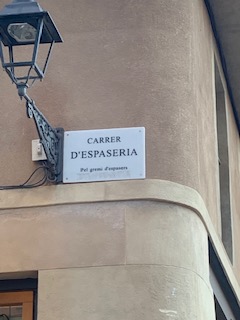
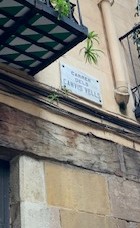
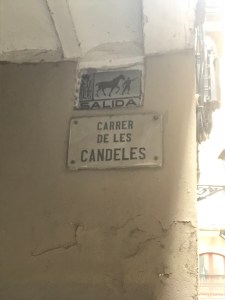
1. Make a list of five streets dedicated to craftsmanship or trades and describe them. What were “Els Gremis” (guilds)?
Els Gremis (The Guilds) played a major role in the commercial institutions in Barcelona from goods to services to a place to exchange these. They were like the freemasons are today.
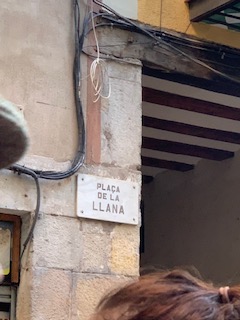
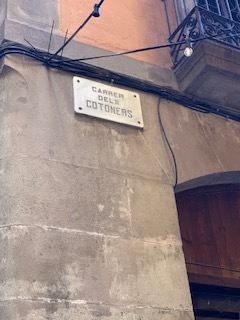
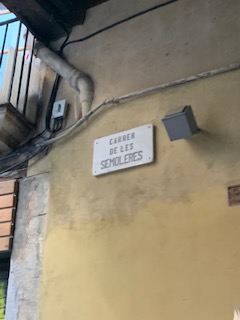
Placa de la Llana. This is the guild for wool. Shepards would bring their sheep to this center for a wool and stock exchangeCarrer dels Cottoners. This is the guild for cotton makers– Carrer de las semoleres/Placa de Santa Caterina. This is the bakery guild area Carrer D’Esparseria. This is the guild of the shield makers-Carrer dels Canvis Vells. This is the where guilds would exchange money that was down by the water. Merchants were able to come by boat to change currency. Carrer de les Candeles. This is the guilds of candles
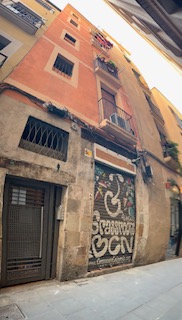
2. “La casa-taller” (The house-workshop) was the typical craftsmanship family house. The same place to live and work. Describe how spaces were organized in a “Casa-taller”.
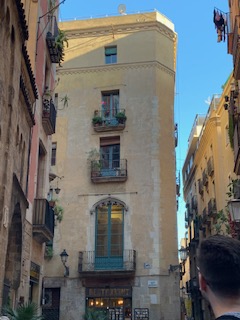
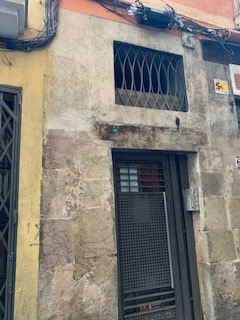
Every “la casa-taller” had similar structures with a large window towards the bottom and smaller ones as the building went up, a staircase that was so small furniture couldn’t fit up it, no bathrooms inside, and some with a balcony that would represent prestige. These homes had the bottom floor used as the workshop for the craftsman that had a large door to enter the store, , the craftsman and the family lived on the first, principal, floor, and the workers/servants lived on the above (normally top) floor that were smaller.As you look higher on the building, the windows get smaller as the higher rooms were used for servants. With each floor having a balcony, one could assume the owner of this home had a quite high prestige.
3. Observing the buildings of this area of Barcelona, mention some of the main architectural aspects that distinguish the craftsmanwork buildings to the industrial production ones. For example, materials, spaces or structures of the buildings and streets.
All of the buildings here are made from local stone. The stone is good for ventilation in the summer and insulation during the winter. The houses would have a large door at the bottom, a small staircase up the home, windows that get smaller as you go up. The large windows on the bottom floor allowed people from the outside to see the products that were being created and for the craftsman to display them.
4. Find the cultural relation of this five places cited bellow to catalan culture. Take on account the different historical periods in each case.
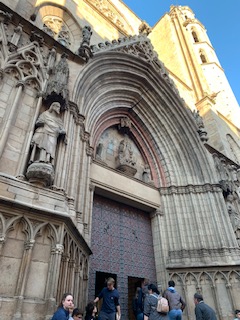
a) Santa María del Mar- This is the church of the guilds for the guilds instead of a church built by the King. There are no decorations to represent sacred-ism and simplicity.
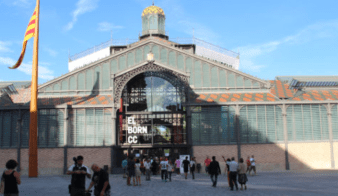
b) El Mercat del Born- This was the core market of the Born area that is the largest covered square in Europe. This market is important for the time period because it was made of iron instead of the normal Stone and Brick and signified the transition to the industrial era.
c) El Fossà de les Moreres- This is a memorial plaza nearby Santa Maria del Mar that is used as a commemoration for the Catalans that lost their lives during the War of the Spanish Succession in 1714. This memorial is built over the cemetery where the Catalan defenders of the city were buried. This area is also where the eternal flame is located and continues burning to honor the Catalans as well.
d) La ciutadella Park (The Fortress of Philip V by 1714)- This was a fortress created by Philip V to keep invaders from conquering Spain and keep control of the city. It remains a symbol of strength and the longevity of Spain.
5. After September 11th 1714 the decrees of Nova Planta were proclaimed in Catalonia by Philip V. Mention the main changes in catalan society doing a little research after the Field study.-
The decrees of Nova Planta were signed laws after the end of the war of Spanish Succession. These decrees had basically made all Catalans act as Spaniards and be loyal to him as well and took away Catalan Parliament. These decrees had taken away the power from the Guilds and made all of Spain an absolute monarch under his control.
6. What is el Consolat de Mar?-
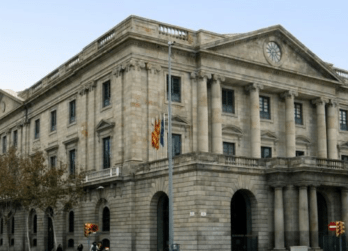
El Consolat del Mar was a judicial body set up by in the Crown of Aragon. This was the market where traders and merchants would negotiate prices and taxes as well as enforce commercial law. Each day prices and taxes on imported products would change so it was important to have a way to keep these prices steady.
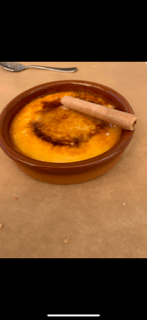
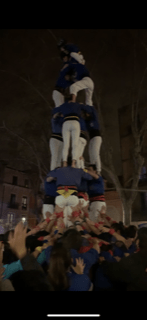
In my short time here in Barcelona, I’ve had the privilege of immersing myself in the Catalan culture, but what exactly is that? To me, Catalan culture is a community, a family of likeminded people that want the best for their beloved Catalunya. Trying to find pictures of this has been challenging, but here is some pictures of my interpretation.
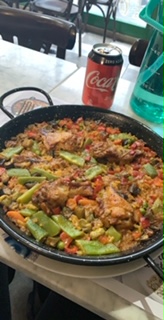
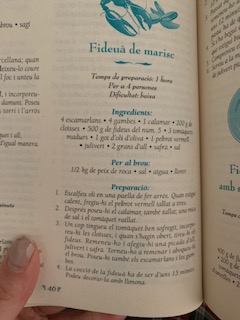
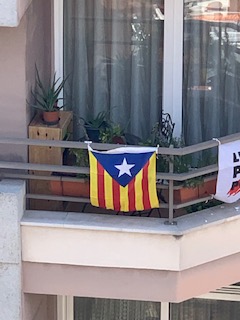
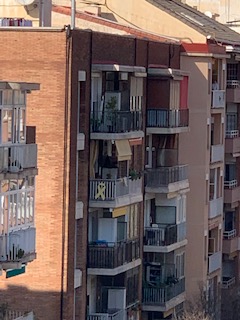
My first picture is a paella that I’d tried in my town of Les Corts. This traditional food is enjoyed by many and tastes delicious! My second picture is a traditional Catalan fideua recipe from my host mother’s Catalan cook book. This recipe uses a great amount of oil and seafood, which I learned is very popular in Catalan dishes. My third picture is the Catalan flag with the star that represents the desire to for catalonia to become an independent nation My fourth picture is a yellow ribbon that represents solidarity with the leaders of the pro-independence movement. The flag and ribbon are two of the most prominent visual signs of Catalonia in my opinion that represent this community and solidarity. My fifth picture is crema catalana, which is a traditional dessert that’s similar to the american creme brulee. This is one of my personal favorite dishes that I’ve tried here thus far. I think that food is an important part of the Catalan culture because it’s something that’s been passed down for generations and is extremely important to keep the culture alive. My final picture is a castell that I’d seen during the festival de Sant Antoni. To me, castells represent community. They lift up others without thinking of the dangers that could happen to them if they for some reason fell. Everyone around the professional castell participants are willing to jump in any where that they’re able. The amount of joy that explodes once the tower is finished and is taken apart carefully is amazing to see in person. There’s so much power that each castell represents and the solidarity between the people. There’s also a great amount of trust that goes in to building these. Not only are you standing on a stranger, but there’s a stranger standing on you and all that’s holding you is others’ hands. Wow. We have nothing like this in America. The first one that I saw in person had given me goosebumps.
This post is extremely heartbreaking to me. The post also said that “This is a brutal murder that has caused outrage in a country where there are ten femicides a day, and is that just a few days before, a young woman was dismembered by her partner.” 10 femicides a day, 10 murders each day, just for being a female. This is a concept that I can’t wrap my head around. Being in the United States, I’ve felt some fear as a female, but never a fear of murder. On top of being a female, this post focuses on the girl being only 7. Wow. What could a 7 year old female do that’s so bad that she deserves to be tortured and murdered? I believe that we should do more to help Mexican woman and embrace them in the U.S., but I can’t see us ever actually doing that. We’re a country that wants to build a wall to separate us from the problem instead of being the helping hand that the country needs. Because of this, I don’t believe that the femicide will ever truly be stopped.
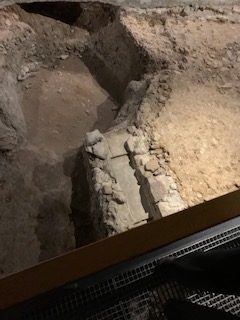
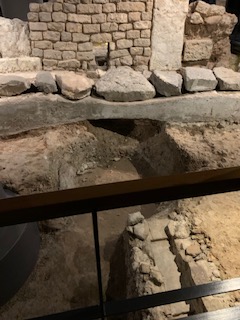
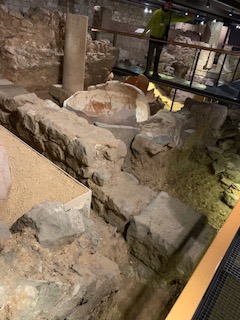
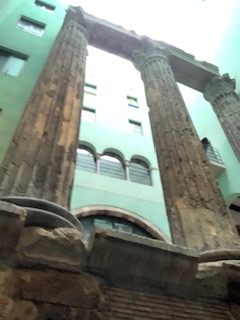
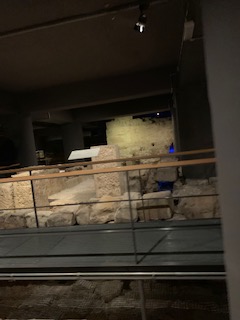
The Romans used columns in their infrastructure as a way of decoration where Catalan buildings use them for the same reasoning, for example, Gaudi’s architecture. Many of the Roman buildings were destroyed or built over, but in some cases, small parts of the architecture may be saved, like columns or arches. The Romans built tall, stone walls with the intention of protecting the city as well as establishing a divide between the wealthy and the poor. The sewer system in Roman times, the aqueduct, was a cut into stone that acted as a path to the sea or other bodies of water. With no kind of running water/plumbing in the houses, the Romans would take public baths, which would also be a place for socializing.
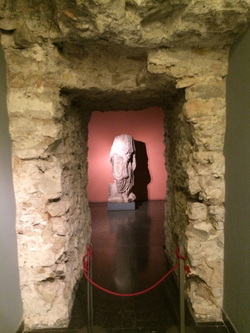
The Roman’s religion was polytheistic where they’d worshiped multiple gods and goddesses. The Romans had multiple temples, statues, and other objects as a way to worship these gods and show their religion. The Roman Empire was converted from their polytheism to monotheism when the emperor Constantine had conquered the empire and destroyed all temples and statues, creating Christian churches. This religion stuck with the region and is observed today as Catholic Christianity.
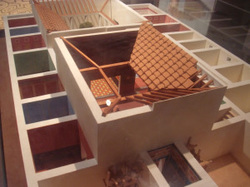
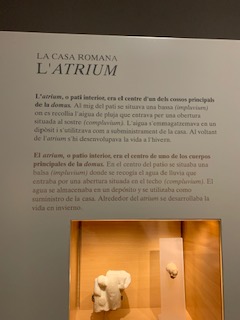
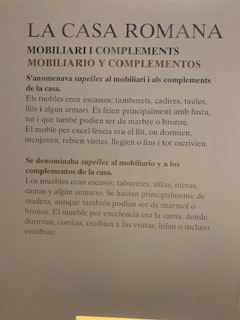
In my opinion, the Domus Romana could be compared to an apartment or a mansion in today’s times. These domus had a Culina room (a kitchen), a Perisylum (a courtyard), an atrium (a large central hall that was used for guests), a triclinium (a dining room), a tablinum (a living room that was able to curtained off public view), and cubicula (small rooms that may be used as bedrooms, libraries, or for meetings). In my opinion, the home is almost like a mansion for a big family, like the white house. The multiple rooms for bedrooms and other activities, the large atrium for the public and the private living room, and my favorite, the courtyard.
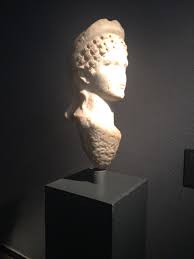
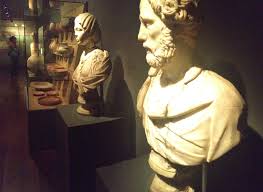
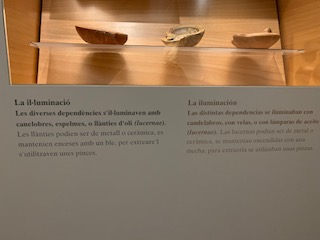
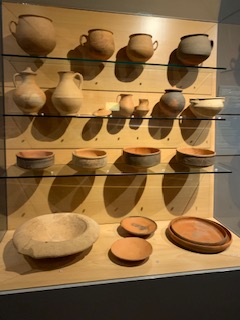
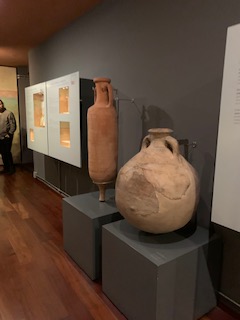
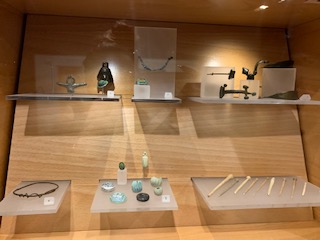
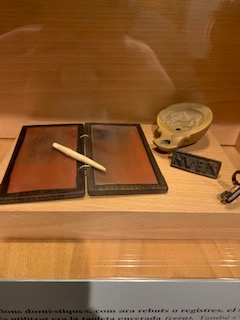
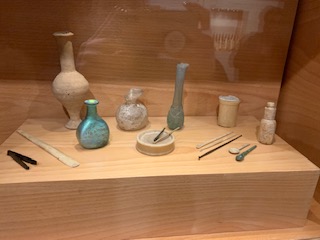
Some of the artifacts that were in the museum were their dishes, their jewelry, their artwork and statues, and many other household objects. Within the dishes I saw many bowls and plates, but no silverware. This is because the Romans tend to eat with their hands and very rarely use a spoon for specific foods. The artifact that surprised me the most was the notebook. I’d never thought that the notebook would date back such a long period of time ago.
The Romans drank wine as their go-to drink and very rarely had any water. Because of this, it was important for them to produce as much wine, as fast as possible. They cut the fermentation process of their wine, leaving it with a less smooth and refreshing taste. The Romans worshiped a god named Bacchus who they considered the God of wine. They believed that he had “shown the Romans how to grow vines and process the grapes for wine.” As the conversion to Christianity came, the use of wine became more symbolic as it represented the blood of Jesus Christ. Wine culture is still a major part of Catalunya for its religious aspect as well as its history. It’s normal in Catalunya to have wine with every meal, even in some cases I’ve noticed with breakfast. Wine is used as a social tool as opposed to a tool to get drunk like it is in other countries, especially America. Two popular brands of wine in Catalunya would be Priorat and Montsant that are both produced in Terragona.
The Visigoths had brought the religion of Catholicism to Catalunya. They’d also brought a different type of architecture to the city, the gothic quarter.
This is the first post on my new blog. I’m just getting this new blog going, so stay tuned for more. Subscribe below to get notified when I post new updates.
This is an example post, originally published as part of Blogging University. Enroll in one of our ten programs, and start your blog right.
You’re going to publish a post today. Don’t worry about how your blog looks. Don’t worry if you haven’t given it a name yet, or you’re feeling overwhelmed. Just click the “New Post” button, and tell us why you’re here.
Why do this?
Because it gives new readers context. What are you about? Why should they read your blog?
Because it will help you focus you own ideas about your blog and what you’d like to do with it.
The post can be short or long, a personal intro to your life or a bloggy mission statement, a manifesto for the future or a simple outline of your the types of things you hope to publish.
To help you get started, here are a few questions:
Why are you blogging publicly, rather than keeping a personal journal?
What topics do you think you’ll write about?
Who would you love to connect with via your blog?
If you blog successfully throughout the next year, what would you hope to have accomplished?
You’re not locked into any of this; one of the wonderful things about blogs is how they constantly evolve as we learn, grow, and interact with one another — but it’s good to know where and why you started, and articulating your goals may just give you a few other post ideas.
Can’t think how to get started? Just write the first thing that pops into your head. Anne Lamott, author of a book on writing we love, says that you need to give yourself permission to write a “crappy first draft”. Anne makes a great point — just start writing, and worry about editing it later.
When you’re ready to publish, give your post three to five tags that describe your blog’s focus — writing, photography, fiction, parenting, food, cars, movies, sports, whatever. These tags will help others who care about your topics find you in the Reader. Make sure one of the tags is “zerotohero,” so other new bloggers can find you, too.
 My Experience with Catalan Culture