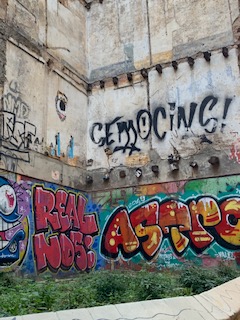
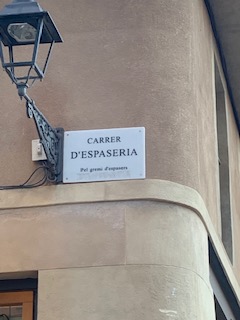
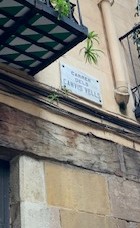
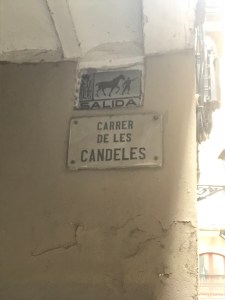
1. Make a list of five streets dedicated to craftsmanship or trades and describe them. What were “Els Gremis” (guilds)?
Els Gremis (The Guilds) played a major role in the commercial institutions in Barcelona from goods to services to a place to exchange these. They were like the freemasons are today.
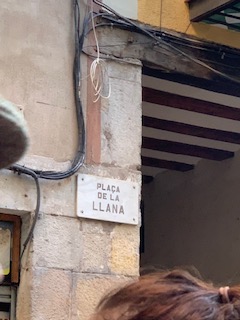
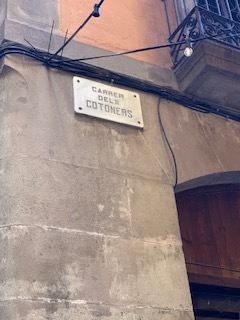
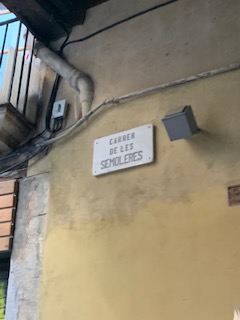
2. “La casa-taller” (The house-workshop) was the typical craftsmanship family house. The same place to live and work. Describe how spaces were organized in a “Casa-taller”.
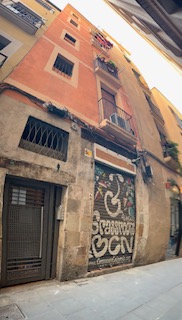
Every “la casa-taller” had similar structures with a large window towards the bottom and smaller ones as the building went up, a staircase that was so small furniture couldn’t fit up it, no bathrooms inside, and some with a balcony that would represent prestige. These homes had the bottom floor used as the workshop for the craftsman that had a large door to enter the store, , the craftsman and the family lived on the first, principal, floor, and the workers/servants lived on the above (normally top) floor that were smaller.
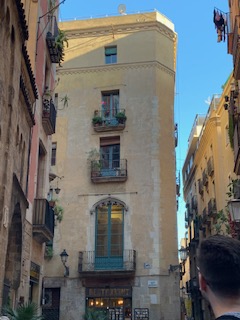
3. Observing the buildings of this area of Barcelona, mention some of the main architectural aspects that distinguish the craftsmanwork buildings to the industrial production ones. For example, materials, spaces or structures of the buildings and streets.
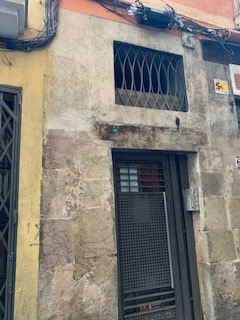
4. Find the cultural relation of this five places cited bellow to catalan culture. Take on account the different historical periods in each case.
a) Santa María del Mar- This is the church of the guilds for the guilds instead of a church built by the King. There are no decorations to represent sacred-ism and simplicity.
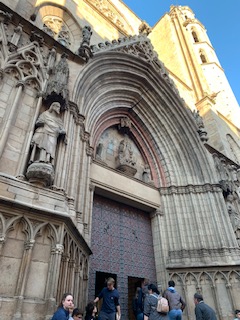
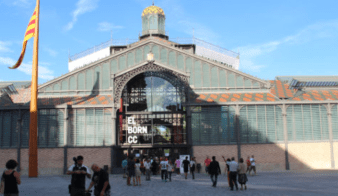
b) El Mercat del Born- This was the core market of the Born area that is the largest covered square in Europe. This market is important for the time period because it was made of iron instead of the normal Stone and Brick and signified the transition to the industrial era.
c) El Fossà de les Moreres- This is a memorial plaza nearby Santa Maria del Mar that is used as a commemoration for the Catalans that lost their lives during the War of the Spanish Succession in 1714. This memorial is built over the cemetery where the Catalan defenders of the city were buried. This area is also where the eternal flame is located and continues burning to honor the Catalans as well.
d) La ciutadella Park (The Fortress of Philip V by 1714)- This was a fortress created by Philip V to keep invaders from conquering Spain and keep control of the city. It remains a symbol of strength and the longevity of Spain.
5. After September 11th 1714 the decrees of Nova Planta were proclaimed in Catalonia by Philip V. Mention the main changes in catalan society doing a little research after the Field study.-
The decrees of Nova Planta were signed laws after the end of the war of Spanish Succession. These decrees had basically made all Catalans act as Spaniards and be loyal to him as well and took away Catalan Parliament. These decrees had taken away the power from the Guilds and made all of Spain an absolute monarch under his control.
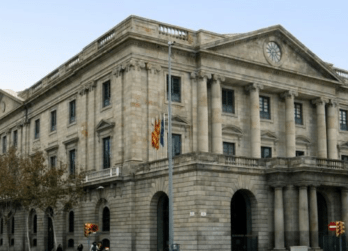
6. What is el Consolat de Mar?-
El Consolat del Mar was a judicial body set up by in the Crown of Aragon. This was the market where traders and merchants would negotiate prices and taxes as well as enforce commercial law. Each day prices and taxes on imported products would change so it was important to have a way to keep these prices steady.
 My Experience with Catalan Culture