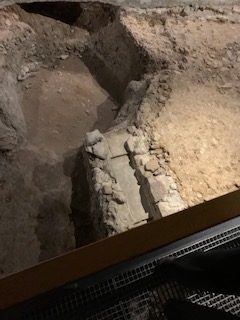
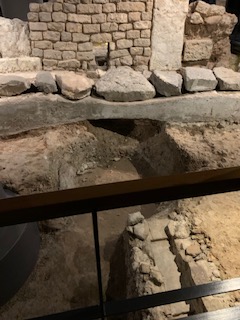
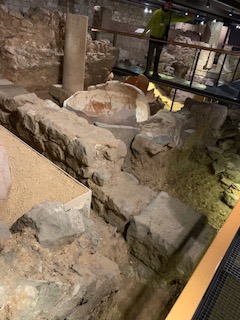
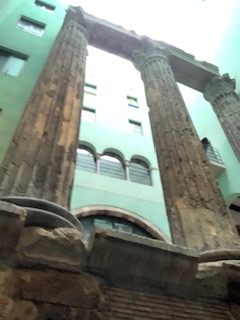
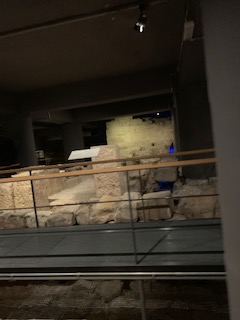
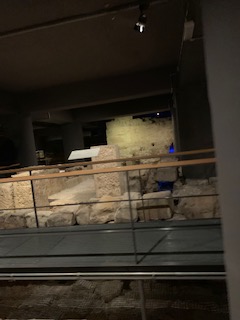
The Romans used columns in their infrastructure as a way of decoration where Catalan buildings use them for the same reasoning, for example, Gaudi’s architecture. Many of the Roman buildings were destroyed or built over, but in some cases, small parts of the architecture may be saved, like columns or arches. The Romans built tall, stone walls with the intention of protecting the city as well as establishing a divide between the wealthy and the poor. The sewer system in Roman times, the aqueduct, was a cut into stone that acted as a path to the sea or other bodies of water. With no kind of running water/plumbing in the houses, the Romans would take public baths, which would also be a place for socializing.
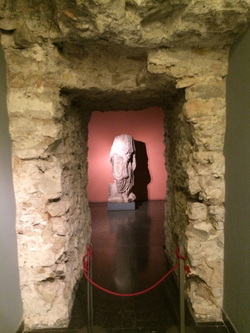
The Roman’s religion was polytheistic where they’d worshiped multiple gods and goddesses. The Romans had multiple temples, statues, and other objects as a way to worship these gods and show their religion. The Roman Empire was converted from their polytheism to monotheism when the emperor Constantine had conquered the empire and destroyed all temples and statues, creating Christian churches. This religion stuck with the region and is observed today as Catholic Christianity.
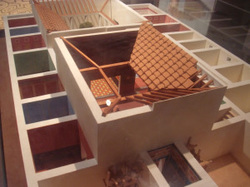
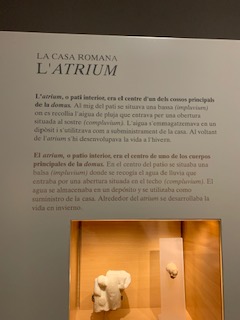
In my opinion, the Domus Romana could be compared to an apartment or a mansion in today’s times. These domus had a Culina room (a kitchen), a Perisylum (a courtyard), an atrium (a large central hall that was used for guests), a triclinium (a dining room), a tablinum (a living room that was able to curtained off public view), and cubicula (small rooms that may be used as bedrooms, libraries, or for meetings). In my opinion, the home is almost like a mansion for a big family, like the white house. The multiple rooms for bedrooms and other activities, the large atrium for the public and the private living room, and my favorite, the courtyard.
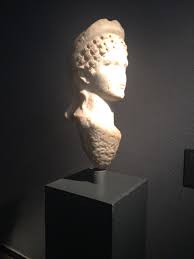
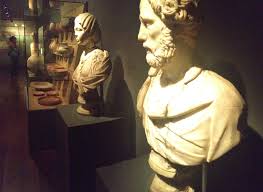
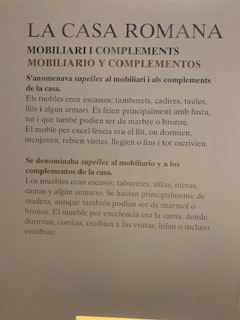
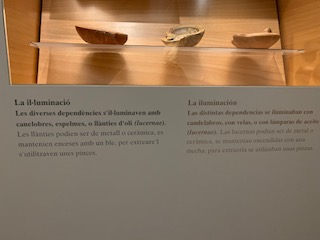
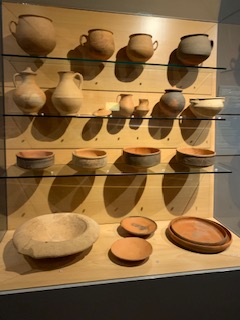
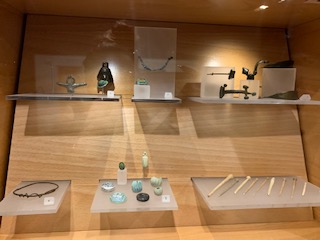
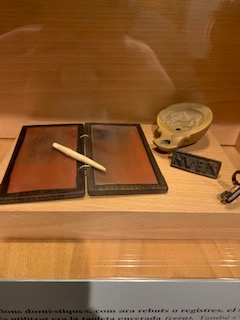
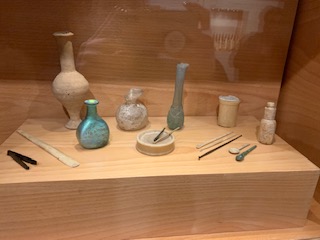
Some of the artifacts that were in the museum were their dishes, their jewelry, their artwork and statues, and many other household objects. Within the dishes I saw many bowls and plates, but no silverware. This is because the Romans tend to eat with their hands and very rarely use a spoon for specific foods. The artifact that surprised me the most was the notebook. I’d never thought that the notebook would date back such a long period of time ago.
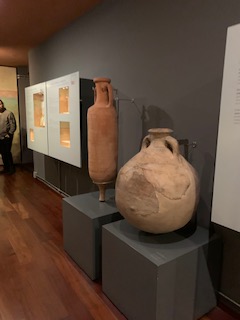
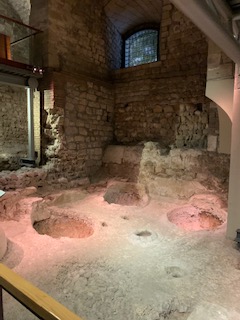
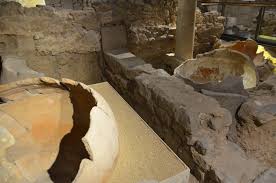
The Romans drank wine as their go-to drink and very rarely had any water. Because of this, it was important for them to produce as much wine, as fast as possible. They cut the fermentation process of their wine, leaving it with a less smooth and refreshing taste. The Romans worshiped a god named Bacchus who they considered the God of wine. They believed that he had “shown the Romans how to grow vines and process the grapes for wine.” As the conversion to Christianity came, the use of wine became more symbolic as it represented the blood of Jesus Christ. Wine culture is still a major part of Catalunya for its religious aspect as well as its history. It’s normal in Catalunya to have wine with every meal, even in some cases I’ve noticed with breakfast. Wine is used as a social tool as opposed to a tool to get drunk like it is in other countries, especially America. Two popular brands of wine in Catalunya would be Priorat and Montsant that are both produced in Terragona.
The Visigoths had brought the religion of Catholicism to Catalunya. They’d also brought a different type of architecture to the city, the gothic quarter.

 My Experience with Catalan Culture